When it comes to securing your family’s future, the terms “estate planning” and “probate” are often used, but they represent two vastly different paths. One is a proactive journey of careful preparation, while the other is a reactive, court-mandated process that can unfold after a loved one has passed. For families across the Bay Area, where the value of assets can be substantial, understanding this distinction is not just a matter of financial literacy—it’s the key to protecting your legacy, preserving privacy, and sparing your loved ones from unnecessary stress and expense. Working with a skilled estate planning attorney Oakland CA is the first step in taking control of this narrative, ensuring your wishes are honored efficiently and effectively.
This guide will break down the fundamental differences between estate planning and probate, clarifying what each process entails and why choosing to plan is one of the most significant decisions you can make for your family.
What is Estate Planning? The Art of Proactive Preparation
Estate planning is the process of creating a detailed roadmap for managing your assets, both during your lifetime and after you’re gone. It’s a comprehensive strategy designed to ensure your wishes are carried out precisely as you intend. Far from being a simple document, a proper estate plan is a collection of legal tools that work together to control the distribution of your property, plan for potential incapacity, and protect your beneficiaries.
The essence of estate planning is control. You make the decisions now, while you are able, so that a court and state law do not have to make them for you later.
Key Goals of a Comprehensive Estate Plan
- Avoiding Probate: The primary goal for most families is to structure assets so they can be transferred privately and efficiently, without the need for court supervision.
- Minimizing Taxes: Strategic planning can help reduce or eliminate potential estate and gift taxes, preserving more of your wealth for your heirs.
- Designating Guardians: For parents of minor children, an estate plan is the only way to legally nominate guardians to care for them if the unthinkable happens.
- Planning for Incapacity: It allows you to appoint trusted individuals to make financial and healthcare decisions for you if you become unable to make them for yourself.
Essential Components of an Estate Plan
| Document | Purpose | Key Benefit |
| Revocable Living Trust | Holds your major assets (home, investments, accounts) for management during life and distribution after death. | Avoids probate, maintains privacy, and provides seamless asset transfer. |
| Pour-Over Will | Acts as a safety net, directing any forgotten assets into your trust upon death. | Ensures all assets ultimately follow the trust’s distribution plan. |
| Durable Power of Attorney for Finances | Authorizes a trusted agent to manage your financial affairs if you become incapacitated. | Prevents the need for a court-supervised conservatorship for finances. |
| Advance Health Care Directive | States your wishes for medical treatment and appoints an agent for healthcare decisions if you’re unable to communicate. | Ensures your healthcare preferences are respected and avoids family disputes over medical care. |
What is Probate? The Court-Supervised Process
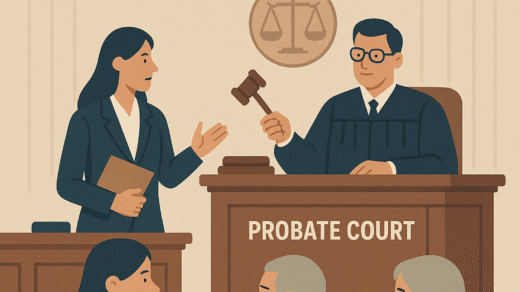
Probate is the formal legal process that validates a will, settles a deceased person’s debts, and distributes their remaining assets to the rightful heirs. If estate planning is the proactive choice, probate is the default consequence of not planning or having an incomplete plan. It is administered by the Superior Court in the county where the deceased person lived.
Why Does Probate Exist?
The court’s involvement is intended to provide a supervised and orderly conclusion to a person’s financial life. Its primary functions are:
- To prove the validity of the will.
- To appoint a personal representative (an executor or administrator) to manage the estate.
- To ensure all legitimate debts and taxes are paid.
- To provide a legal transfer of title for assets to the beneficiaries.
While well-intentioned, this court oversight is inherently bureaucratic, time-consuming, and expensive.
The Probate Timeline: A Step-by-Step Overview
The probate process follows a rigid, statutory timeline:
- Filing the Petition: Someone files a petition with the court to open the probate case.
- Notifying Parties: All potential heirs and creditors are formally notified.
- Court Hearing: The court appoints a personal representative to officially manage the estate.
- Inventory and Appraisal: The representative must catalogue and appraise all estate assets.
- Creditor Claim Period: Creditors have a specific period (typically four months) to file claims.
- Paying Debts and Taxes: The representative pays all valid debts and files final tax returns.
- Final Accounting and Distribution: After all obligations are met, the representative asks the court for permission to distribute the remaining assets to the heirs.
- Closing the Estate: The court formally closes the case.
Head-to-Head Comparison: Estate Planning vs. Probate
Understanding the direct contrasts between these two paths makes the benefits of proactive planning crystal clear.
Timing: Before Death vs. After Death
- Estate Planning: Occurs during your lifetime, when you are in full control of your decisions. You get to choose your fiduciaries, define your terms, and build the exact plan you want.
- Probate: Is an after-death process. Your family is left to navigate a complex legal system during a time of grief, and the court makes the key appointments and decisions.
Cost: Strategic Investment vs. Mandatory Expense
- Estate Planning: Involves an upfront investment to have legal documents professionally drafted. While not free, this cost is a fraction of the alternative.
- Probate: The costs are significant and mandated by California law. Attorney and executor fees are calculated as a percentage of the gross value of the estate. For example, on a $1.5 million estate (a common figure for a Bay Area home), statutory fees for the attorney and the executor could each be $28,000, for a total of $56,000, plus court filing fees, appraisal fees, and other costs.
Privacy: Confidential vs. Public Record
- Estate Planning: A plan centered around a living trust is a completely private affair. The terms of your trust and the details of your assets are not available to the public.
- Probate: Is a public court proceeding. Your will, a complete inventory of your assets, a list of your debts, and the names of your beneficiaries all become part of the public record, accessible to anyone who wants to look.
Control: Your Rules vs. The Court’s Rules
- Estate Planning: You are in the driver’s seat. You can specify not only who inherits your assets, but also how and when. You can create trusts to protect a beneficiary from creditors or their own poor judgment.
- Probate: The process is governed strictly by the California Probate Code and the court’s rules. A judge oversees every major step, and there is little flexibility. Your family’s needs must fit within the rigid structure of the law.
Timeframe: Immediate vs. Months (or Years)
- Estate Planning: Trust administration can begin almost immediately after death. Your successor trustee can access assets and start managing the estate right away.
- Probate: The process is notoriously slow. In the Bay Area, even a simple, uncontested probate can easily take 12 to 24 months from start to finish. If any disputes arise, it can drag on for years.
Conclusion
Ultimately, the choice between estate planning and probate is a choice between proactivity and reactivity. Estate planning is a deliberate act of care and foresight—a gift you give your loved ones. It empowers you to control your legacy, protect your family’s privacy, and save them from the immense cost and stress of a public court battle. Probate, on the other hand, is the burdensome process that happens when a plan is not in place. By taking the time now to create a comprehensive estate plan, you are not just managing assets; you are preserving peace of mind for those you care about most. Engaging a qualified probate attorney Oakland CA to help you craft this plan ensures that your intentions are legally sound and that your family is protected when they need it most.