
The Medical Bills Keep Coming Long After the Settlement Check Clears
There’s a moment I’ve heard described dozens of times, usually in a comment thread somewhere around 10 p.m. Someone cashed their auto injury settlement check a few weeks ago. They felt relief—finally, it was over. Then a bill arrived. Physical therapy, a follow-up MRI, a specialist visit that happened after the paperwork was signed. And suddenly the relief curdled into something closer to dread.
That moment is exactly why I’m writing this.
The check clears, but the body doesn’t always cooperate with the legal timeline. If you’re in that situation right now—or if you’re about to sign and you’re not sure what you’re agreeing to—this is the conversation I wish more people had before the ink dried.
What “Settled” Actually Means for Your Medical Future
Most auto injury settlements include a full and final release. That language matters more than almost anything else in the document. When you sign it, you’re typically agreeing that the compensation you received covers not just your current medical bills, but any future treatment connected to the crash—whether or not you’ve needed it yet.
That’s the gap that blindsides people.
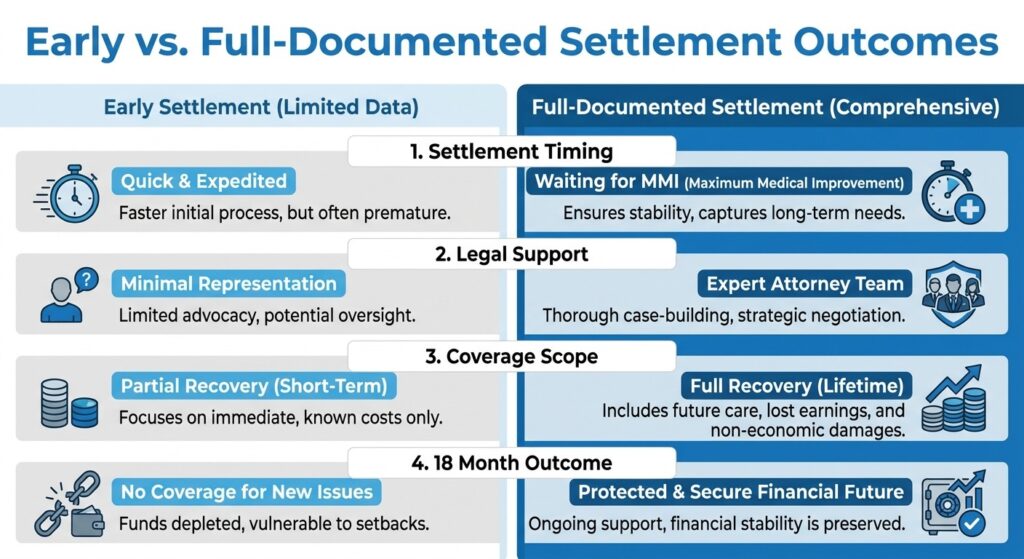
The settlement is framed as a conclusion. But your recovery isn’t finished just because the case is. Consider two people rear-ended at similar speeds:
| Person A | Person B | |
|---|---|---|
| Approach | Settled quickly | Waited for full picture |
| Legal support | Minimal | Worked with a boston auto accident lawyer who projected future care needs |
| Settlement covered | ER visit + two months of PT | Full arc of recovery |
| Outcome 18 months later | Needed cervical surgery, no coverage | Financially protected |
Same injury. Very different financial outcomes. The difference wasn’t luck—it was timing and documentation.
The Timeline That Determines What You Can Claim
Here’s how the sequence usually unfolds, and where the critical decisions live.
Weeks 1–6: The record is being built. In the weeks immediately after a crash, most people are focused on getting better. Treatment starts, insurance claims are filed, and an attorney may or may not be involved. This early phase feels administrative, but it’s actually when the medical record that will define your claim is being built. Every visit, every diagnosis, every referral matters.
Months 3–9: The pressure window. This is when the insurance company starts nudging toward resolution. Adjusters know that injured people are often exhausted, financially stretched, and emotionally ready to be done. Early settlement offers frequently arrive before the full picture of ongoing care is clear. Accepting at this stage is one of the most common and costly mistakes in personal injury claims.
The MMI threshold. What should be happening instead? Your treatment should be reaching what doctors call “maximum medical improvement” (MMI)—the point where your condition has stabilized enough that future care needs can be meaningfully projected. This doesn’t mean you’re fully healed. It means a qualified medical expert can now look at your records and say with reasonable certainty: here’s what this person is likely to need going forward, and here’s what it will cost.
If you’re still in active treatment, still waiting on a specialist opinion, or still being evaluated for a potential surgery, you are not at MMI. Settling before that point means you’re accepting a number based on incomplete information.
Negotiation and settlement. This final phase is where everything that was documented and projected either gets used or gets left on the table. A personal injury attorney’s job here is to translate your medical reality into a number the insurance company has to reckon with. That only works if the medical reality has been properly captured.
What Future Medical Expenses Actually Cost
Future medical expenses aren’t just a line item. They’re a projection that has to account for the type of care you’ll need, how long you’ll need it, and what that care will cost over time—including inflation.
Here’s what chronic care actually involves for a moderate-to-serious auto injury:
- Physical therapy — may continue for months or years post-settlement
- Pain management visits — periodic consultations, often ongoing
- Prescription medications — long-term costs that compound quietly
- Imaging — follow-up MRIs, X-rays tied to evolving symptoms
- Surgical consultation and intervention — spinal injuries alone can run into the tens of thousands
- Assistive devices and home modifications — frequently overlooked in early estimates
- Lost earning capacity — ongoing limitations that affect income, not just medical bills
Insurance companies know this math too. They use it—selectively. Medical bills are often the primary factor adjusters use when valuing a claim, because they’re empirical and defensible. But insurers tend to apply that logic to what’s already been spent, not what’s coming. Their incentive is to settle before the full cost picture is clear.
In Massachusetts, as in most states, the full amount of medical bills—not just what insurance paid—should be the basis for negotiations. Health insurance often negotiates reduced rates with providers. If you only present the adjusted amount, you’re undervaluing your own claim. Future costs need to be projected over your expected lifetime, adjusted for medical inflation, and tied to your specific injury pattern and treatment history.
The Two Experts Who Make Future Costs Visible
This is where two specific roles become essential.
The medical expert — typically a physician or specialist in the relevant field — reviews your treatment history and provides an opinion on what future care you’ll likely require. This isn’t speculation. It’s a professional assessment grounded in your records, your diagnosis, and established treatment protocols for your type of injury. In a negotiation or at trial, this testimony transforms “I might need surgery someday” into a documented, defensible claim.
The life care planner takes that medical opinion and builds a comprehensive financial projection around it. Life care plans are typically reserved for more serious or catastrophic injuries—spinal cord damage, traumatic brain injury, conditions requiring lifelong intervention. For less severe injuries with a defined recovery arc, a medical cost projection serves a similar purpose at a smaller scale.
What does this look like in practice? A life care planner working on a herniated disc case might project:
- 24 additional physical therapy sessions over the next year
- Annual pain management consultations for five years
- One surgical consultation
- A potential microdiscectomy with associated recovery costs
- Ongoing medication for chronic pain management
Each item is priced at current rates and adjusted forward. The total becomes a documented, expert-supported number your attorney can use in negotiations.
Insurance adjusters don’t like life care plans. That’s actually a signal of how effective they are. When a well-documented future care projection lands on an adjuster’s desk, it shifts the conversation from “what do you think you’ll need?” to “here’s what the evidence shows.” That’s a fundamentally different negotiation.
How Insurers Push Back—and How to Counter It
The clearest contrast in any personal injury claim: a claimant who settles without expert documentation versus one who doesn’t.
Without a medical expert’s opinion on file, future expenses are easy to dismiss as guesswork. With a documented projection from a qualified specialist, the insurance company has to either accept the number or prepare to defend their lower offer in front of a jury—where jurors respond strongly to the human reality of ongoing medical costs.
Insurers will typically argue along three lines:
- Speculation — that future treatment hasn’t been proven necessary
- Current condition — that your present state doesn’t justify the projected care
- Pre-existing history — that your own health contributed to your symptoms
These aren’t unreasonable arguments in the abstract. They’re just applied strategically to reduce payouts. Your job, with your attorney, is to make the case airtight enough that those arguments don’t hold.
There’s also the trial scenario. Future medical expenses become part of the damages calculation, and a life care plan or medical cost projection becomes exhibit-level evidence. Juries don’t always side with plaintiffs, but a well-supported future care claim gives your attorney something concrete to argue.
One more scenario worth naming: what if you’ve already settled and new symptoms have emerged? In most cases, a signed release closes that door. There are narrow exceptions—fraud, mutual mistake, newly discovered conditions that couldn’t have been known—but they’re genuinely difficult to pursue. This is the hard truth behind all the late-night comment-thread panic I mentioned at the start. Once you’ve signed, your options narrow significantly.
“But I Already Settled—Is It Too Late?”
Maybe. But not always entirely.
If you haven’t signed yet and you’re feeling pressure to close quickly, slow down. The discomfort of delay is almost always smaller than the financial exposure of settling before your future care needs are documented.
If you have signed and you’re now facing unexpected bills, talk to a personal injury attorney about whether any exceptions apply to your situation. It’s a long shot, but it’s worth understanding your position clearly rather than assuming the worst.
And if you’re currently in treatment and haven’t settled yet—this is your window. Use it.
Before You Sign: A Practical Checklist
A settlement check is supposed to represent the end of your financial exposure to this crash—not the beginning of a new set of problems. Before anyone puts a pen in your hand, work through these questions honestly.
Have you reached maximum medical improvement? If your treatment is still active or your prognosis is uncertain, you’re not ready to settle.
Has a medical expert reviewed your records and projected future care? If not, your attorney should be arranging this—especially for injuries involving the spine, joints, or neurological function.
Does your settlement number reflect the full cost of future treatment? Not just what you’ve spent, but what you’re likely to spend over the coming years, adjusted for inflation and your specific condition.
Do you understand what you’re releasing? A full and final release means exactly that. Ask your attorney to walk you through the language before you sign.
Is your attorney experienced with future medical cost projections? This is a specific skill set. Not every personal injury attorney works regularly with life care planners or medical cost experts. It’s a fair question to ask directly.
Getting to the right number requires planning that starts well before anyone hands you a pen. The body heals on its own timeline. Your settlement should reflect that—not fight against it.