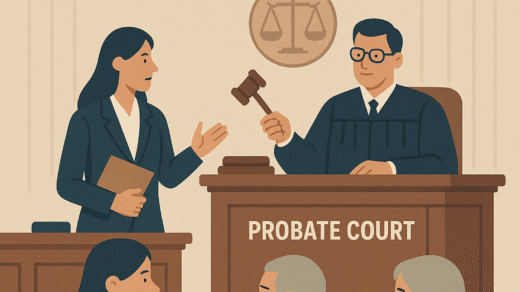
Before any court document is filed, you must understand your core legal obligation. An executor, known in California courts as the Personal Representative, is a fiduciary. This means you must act with the highest degree of honesty, good faith, and prudence, prioritizing the interests of the estate and its beneficiaries above your own.
The Fiduciary Standard: Honesty and Prudence
Your duties mandate two essential principles:
- Loyalty: You must avoid all conflicts of interest and never use estate assets for your personal gain.
- Prudence: You must manage the estate’s assets as a cautious person would manage their own property, ensuring assets are preserved, insured, and handled responsibly. Mismanagement can lead to personal liability.
Gaining Legal Authority: The Letters Testamentary
Simply being named in a Will does not grant you legal authority to act. Your authority only becomes effective when the Superior Court judge issues Letters Testamentary (or Letters of Administration if there is no Will). These “Letters” are the official court order that validates your power to sell property, access bank accounts, and manage the estate. Obtaining them requires successfully navigating the first few crucial steps of the probate process.
Phase 1: Immediate Steps After Death (First 30 Days)
The initial period following the death requires swift, organized action to secure the decedent’s property and initiate the court process.
1. Secure All Estate Property
Your first duty is to secure and protect the decedent’s assets.
- Real Estate: Change locks if necessary, ensure all property insurance is current, and maintain the premises (e.g., pay the mortgage, utilities, and taxes). Vacant property is highly susceptible to risk.
- Valuables: Collect and secure jewelry, artwork, and important documents like stock certificates, bank statements, and the original Will.
- Digital Access: List all online accounts, passwords, and digital assets.
2. Locate and Lodge the Original Will
If a Will exists, you have a statutory duty to deliver (lodge) the original document with the Superior Court in the county where the decedent resided at the time of death (e.g., Alameda County) within 30 days of learning of the death. Failure to lodge the Will can result in penalties.
3. Initiate the Probate Case and File the Petition
This is the formal start of court involvement.
- Consult Legal Counsel: Because of the complex forms, notices, and procedural deadlines, this is the time to engage a California probate attorney to prepare and file the Petition for Probate (Form DE-111).
- Required Documents: The petition package must include the original Will, the death certificate, and the signed Duties and Liabilities of Personal Representative (Form DE-147), which confirms your commitment to your fiduciary duties.
Phase 2: Court Appointment and Notice (3 to 6 Months)
This phase is characterized by mandatory legal waiting periods, primarily dictated by the court schedule and notice requirements.
4. Provide Notice to Interested Parties and Publish
California law requires formal notification of the probate proceeding to two groups:
- Heirs and Beneficiaries: You must mail a copy of the Notice of Petition to Administer Estate (Form DE-121) to all known heirs and beneficiaries at least 15 days before the first scheduled court hearing.
- General Public: You must arrange for the Notice to be published in a general circulation newspaper in the appropriate county. This serves as official notice to unknown heirs and creditors.
5. Attend the First Court Hearing and Obtain Letters
At the scheduled hearing, the judge will confirm the validity of the Will (if one exists) and formally appoint you as the Personal Representative.
- Issuance of Letters: Once appointed, the court clerk issues the Letters Testamentary, which is your critical document of authority. You should obtain several certified copies, as you will need them to manage bank accounts, transfer titles, and perform administrative tasks.
- Surety Bond: If the Will does not specifically waive the bond, or if the Personal Representative is not a California resident, the court may require you to purchase a Surety Bond. This is an insurance policy protecting the estate against financial loss due to executor misconduct, and its cost is paid by the estate.
6. Open an Estate Bank Account
Using your Letters Testamentary and the estate’s Federal Tax Identification Number (EIN), you must open a dedicated bank account in the name of the estate. All assets collected and all expenses paid must flow through this account. Commingling estate funds with your personal funds is a serious breach of fiduciary duty.
Phase 3: Asset Valuation and Creditor Management (4 to 12 Months)
This is where the bulk of the financial administration and mandatory legal waiting periods occur.
7. Inventory and Appraise All Probate Assets
Within 4 months of your appointment, you must complete and file the Inventory and Appraisal (Form DE-160).
- Probate Referee: The court appoints a Probate Referee to value most non-cash assets, such as real estate, vehicles, and business interests, as of the decedent’s date of death. You are responsible for completing the non-appraised sections (like cash accounts) and submitting the form to the Referee. Delays in this step are common with complex assets and will extend the overall probate timeline.
- Asset Management: During this time, you must continue to actively manage and maintain all estate assets, collecting income (rent, dividends) and ensuring insurance coverage is continuous.
8. Notify Creditors and Resolve Claims
California law provides a mandatory four-month window from the date Letters Testamentary are issued during which creditors can file claims against the estate.
- Notice: You must mail a formal Notice of Administration to Creditors to all known or reasonably ascertainable creditors.
- Review and Respond: You must review every claim. If you believe a claim is valid, you allow it; if you believe it is invalid, you must reject it. You have 30 days to respond to a claim. Only legitimate debts should be paid from the estate.
9. Handle Taxes and Final Expenses
- Final Income Taxes: You must arrange for the filing of the decedent’s final personal state and federal income tax returns (Form 1040) for the year of death.
- Estate Income Taxes: If the estate generates income (e.g., from rental property or investments) after the date of death, you may need to file an Estate Income Tax Return (Form 1041).
- Federal Estate Taxes: For very large estates (those exceeding the federal exemption threshold), you must file a Federal Estate Tax Return (Form 706). If this is required, the probate period is automatically extended to 18 months, as closure must wait for IRS clearance.
Phase 4: Distribution and Closing the Estate (12 to 18+ Months)
Once all debts, taxes, and claims are resolved, you can petition the court for the final authorization to distribute the remaining inheritance.
10. File the Final Accounting and Petition for Distribution
You must prepare a comprehensive Final Accounting and Report that details every financial transaction that occurred during your administration. This document must show all assets at the start, all income received, all expenses and debts paid, and the final list of assets remaining for distribution. Alternatively, if all beneficiaries agree, you can file a waiver of the formal accounting.
11. Final Court Approval and Asset Transfer
The court schedules a final hearing to review your accounting and approve the distribution plan. Once the judge signs the Order for Final Distribution, you have the legal mandate to transfer the assets.
- Distribution: You must legally transfer ownership of all assets (deeding real estate, transferring brokerage titles, writing checks) to the named beneficiaries according to the court order and the Will’s instructions.
- Receipts: You must obtain signed receipts from every beneficiary as proof that they received their share.
12. Petition for Final Discharge and Case Closure
The last official task is to file a final petition requesting that the court formally discharge you from your duties as Personal Representative. By filing the final receipts and the petition for discharge, the court legally closes the case and relieves you of any future liability concerning the estate’s administration. This final step is the successful culmination of your responsibility.
The Benefit of Professional Support
Successfully navigating these complex duties requires attention to detail and unwavering adherence to the California Probate Code. Errors at any stage—whether in preparing the initial petition, sending notices, or calculating final taxes—can lead to delays, additional cost, and even litigation. As far as minimizing risk and maximizing efficiency goes, working with an experienced probate attorney is not just helpful; it is often essential. A skilled legal professional, like a dedicated probate attorney Oakland or one specializing in other local jurisdictions, can manage the filings, adhere to the strict statutory deadlines, and handle complex legal issues (such as Will contests or asset liquidation), allowing you to focus on the overall administration and fulfilling your ultimate duty to the decedent’s legacy. This expertise protects you from the serious potential for personal liability that accompanies the fiduciary role.