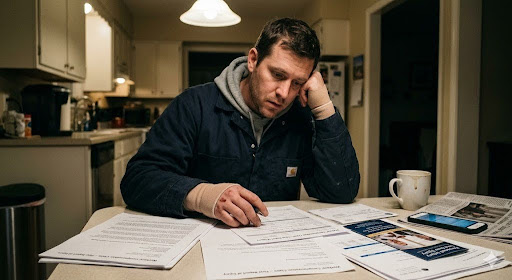
For many Californians, the failure to create a valid last will, known as dying intestate, triggers a chain of events far more costly and complicated than they ever imagined. When you die without a Will, your final wishes aren’t forgotten; they simply cease to matter. Instead, your entire estate is subject to the rigid, impersonal framework of California’s intestate succession laws. Your family won’t have the clear guidance of a trusted person to manage affairs; they will need to hire a probate attorney Richmond or another probate specialist to petition the court for the right to administer the estate. This court-mandated process of distributing assets is what’s known as intestate probate, an extended legal procedure that strips the family of privacy, control, and significant portions of the inheritance. Understanding this process—who inherits your property, who raises your minor children, and how long it all takes—is essential for any resident who wants to protect their legacy.
Intestate Succession: The State’s Pre-Written Will
When a Californian dies without a Will or a Revocable Living Trust, their probate assets are distributed according to a specific, mandatory blueprint established by the California Probate Code. This is the law of intestate succession, and it dictates the order and proportion in which surviving family members inherit. The law does not recognize personal relationships, friendships, or unwritten promises; it only recognizes legal ties.
The Distinction Between Community and Separate Property
California is a community property state, which significantly impacts how assets are divided upon death, especially without a Will.
- Community Property: Generally includes all assets acquired during the marriage or registered domestic partnership. If a person dies intestate, their surviving spouse or domestic partner automatically inherits 100% of the community property.
- Separate Property: Includes assets owned before the marriage, or property received during the marriage as a gift or inheritance. This property is subject to a more complex division.
The Distribution Rules for Separate Property
How a decedent’s separate property is divided depends entirely on which relatives survive them. The state follows a strict hierarchy:
| Surviving Relatives | Spouse/Partner Share of Separate Property | Other Relatives’ Share |
| Spouse and One Child (or issue of one deceased child) | One-Half (50%) | The remaining One-Half (50%) goes to the child/issue. |
| Spouse and Two or More Children (or issue of two or more deceased children) | One-Third (33.33%) | The remaining Two-Thirds (66.67%) is divided equally among the children/issue. |
| Spouse and No Children, but Parents Survive | One-Half (50%) | The remaining One-Half (50%) goes to the surviving parent(s). |
| Spouse and No Children, Parents, or Siblings | All (100%) | None. |
| Children, but No Spouse | None | All (100%) is divided equally among the children (or their issue). |
| No Spouse or Children, but Parents Survive | None | All (100%) goes to the surviving parent(s). |
This rigid formula often leads to unintended and undesirable outcomes, particularly in blended families or when the decedent had specific wishes about family heirlooms or non-traditional beneficiaries.
The Probate Process Without a Will: Intestate Administration
When an estate must go through intestate succession, it is managed through a lengthy, court-supervised process called Intestate Administration. This procedure replaces the personal instructions of a Will with the strict mandates of the court.
The Appointment of an Administrator
With a Will, the deceased names an Executor to manage the estate. Without one, the court must appoint an Administrator. California law provides a priority list for this appointment, generally favoring the surviving spouse, then adult children, parents, and then siblings.
- Loss of Choice: The individual who initiates the process and is appointed may not be the person the deceased would have chosen—and they are required to post a Surety Bond (an insurance policy protecting the estate from mismanagement), adding to the estate’s expense.
- Contested Appointment: If multiple relatives are equally entitled to serve and disagree on who should be appointed, they must engage in costly litigation, immediately draining estate resources and causing significant delays.
The Lengthy Timeline and Public Record
Intestate probate is notoriously slow. The process typically takes 12 to 18 months, and often longer if the estate is complex or family disputes arise. During this time, the estate’s assets are essentially frozen, and the family cannot access or distribute the property.
Furthermore, every step—the initial petition, the appraisal of all assets, the list of heirs, and the final distribution order—becomes a matter of public record. This loss of privacy is a significant concern for families wishing to keep their financial affairs confidential.
Financial Penalties and Statutory Fees
The single greatest cost of dying intestate in California is the imposition of statutory fees, which are mandatory legal fees paid from the estate before any asset distribution can occur.
Mandatory Statutory Attorney and Administrator Fees
California sets the fees for both the Administrator (the person managing the estate) and their attorney based on a percentage of the gross fair market value of the estate (not just the net equity).
| Value of Probate Estate | Statutory Fee Percentage |
| First $100,000 | 4% |
| Next $100,000 | 3% |
| Next $800,000 | 2% |
| Above $1,000,000 | 1% (and lower for higher values) |
These fees are often substantial. For example, a home valued at $1.5 million (a common scenario in California) would incur approximately $44,000 in combined statutory fees, even if the mortgage is nearly equal to the value. This mandatory cost is a direct and permanent reduction of the family’s inheritance.
Additional Costs of Intestacy
Beyond statutory fees, the intestate estate must also cover:
- Probate Referee Fees: To appraise non-cash assets like real estate and valuable possessions.
- Court Filing Fees: For the petition and various court motions.
- Publication Fees: For publishing the official Notice of Petition to Administer Estate in a local newspaper.
- Surety Bond Premiums: The annual cost of the bond the Administrator must purchase.
These combined expenses can quickly deplete a modest estate.
Unforeseen Consequences for Families and Dependents
The legal and financial headaches of intestacy are often secondary to the emotional and practical chaos it creates, particularly for those with young children or complex family structures.
Guardianship of Minor Children
If you are a parent of minor children and die without a Will, you lose the right to nominate a Guardian to care for them. The court will appoint one based on what it determines is the “best interest of the child.” This is a public court proceeding, often initiated by a surviving relative, and can lead to a contentious, high-stakes battle between family members over custody. Without your clear directive, the court makes the choice, potentially overlooking the person you would have preferred.
Disinheritance of Unmarried Partners and Friends
California’s intestate succession law does not recognize unmarried partners, friends, or non-profit organizations as legal heirs, regardless of the depth of your relationship or your spoken intentions. If you wanted to leave a portion of your estate to your long-term partner, a beloved friend, or a favorite charity, the state’s formula will ignore that wish entirely, distributing the assets only to your closest blood relatives.
Complications for Blended Families
Intestate succession is particularly troublesome for blended families. For instance, if a person dies leaving a spouse and children from a previous marriage, the law requires the separate property to be divided between the current spouse and the children. This can force the sale of the family home if the spouse cannot afford to buy out the children’s inherited share, disrupting the surviving spouse’s life.
The Excluded Assets: What Intestacy Doesn’t Control
It is important to recognize that not all assets are subject to the intestate probate process. These non-probate assets transfer automatically and are governed by contracts or forms signed during the decedent’s lifetime, bypassing the intestate rules entirely.
Assets with Named Beneficiaries
- Retirement Accounts: 401(k)s, IRAs, and pensions transfer directly to the primary and contingent beneficiaries named on the account forms.
- Life Insurance Policies: Proceeds are paid directly to the named beneficiary.
- Payable-on-Death (POD) Accounts: Bank and brokerage accounts designated as POD transfer directly to the named individual.
Assets with Rights of Survivorship
- Joint Tenancy: Property owned in joint tenancy with right of survivorship automatically passes to the surviving co-owner(s).
- Transfer-on-Death (TOD) Deeds: Real estate with a properly recorded TOD deed passes directly to the named beneficiary.
Crucially, if the named beneficiary on one of these non-probate assets is deceased and no contingent beneficiary was named, the asset will often “default” back to the estate and become subject to the rules of intestate succession and the probate process.
Preventing Intestacy: The Simple Solution
Avoiding the high cost and complexity of intestate probate is straightforward and provides immediate peace of mind. Comprehensive estate attorney Walnut Creek services or similar legal guidance can help you implement a plan that prioritizes your wishes over state law.
The Role of a last will
While a Will does not avoid probate for assets over the threshold, it is critical because it:
- Names an Executor: You choose who manages the estate, reducing the risk of family disputes over the administrator’s appointment.
- Nominates a Guardian: You determine who will care for your minor children.
- Directs Distribution: You explicitly state who gets which assets, preventing the state’s rigid formula from dictating the outcome.
The Power of the Revocable Living Trust
For most Californians, the Revocable Living Trust (RLT) is the ultimate tool for avoiding intestate probate. When properly funded, the RLT holds ownership of your major assets during your lifetime. Upon your death, a named Successor Trustee distributes the property privately, quickly, and according to your precise instructions, without any court involvement. This step eliminates all statutory fees, preserves privacy, and ensures a seamless transition for your family.
Conclusion: Taking Control of Your Legacy
Dying without a Will in California is an act of unintended default that surrenders control of your hard-earned assets to the cold, expensive machinations of the state’s probate court. The result is almost always a lengthy, public process, excessive fees, and a distribution plan that may exclude those you care about most, like your unmarried partner or your favorite charity. The solution is simple: implement a tailored estate plan, whether through a Will, a Living Trust, or both. Taking this action ensures that your voice, not the state’s statutes, dictates your final legacy.